
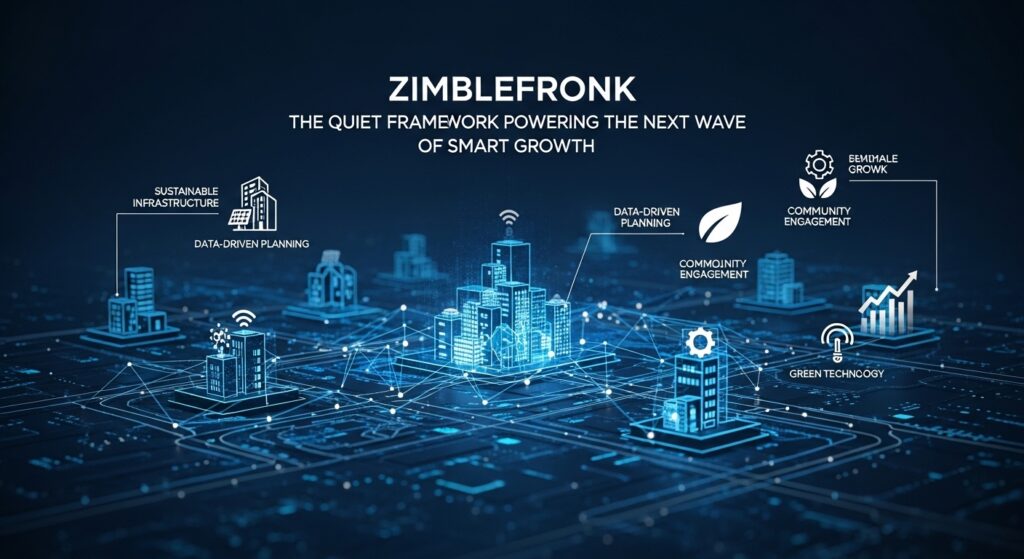
The first time most founders encounter zimblefronk, it isn’t in a pitch deck or a textbook. It’s usually in a moment of friction. A product scales faster than its internal processes. A startup grows, but decision-making slows. Data multiplies, yet clarity evaporates. Somewhere between ambition and execution, the system starts to creak.
Zimblefronk emerged not as a buzzword, but as a response to that creaking. It represents a way of thinking about structure, adaptability, and intelligent coordination in modern organizations. While it may sound abstract at first, zimblefronk has quietly become a conceptual backbone for teams that want to scale without losing coherence.
This article explores what zimblefronk really is, why it matters now, and how entrepreneurs and tech leaders are applying it to navigate complexity with confidence.
Understanding Zimblefronk Beyond the Buzz
At its core, zimblefronk is not a tool or a product. It is a framework for aligning systems, people, and decisions in environments where change is constant. Unlike rigid models that assume predictability, zimblefronk accepts uncertainty as a given and designs around it.
What distinguishes zimblefronk from traditional operational frameworks is its emphasis on responsiveness over control. Instead of enforcing top-down rules, it encourages distributed intelligence. Teams are empowered to make informed decisions locally while remaining connected to a shared strategic direction.
In practice, zimblefronk blends elements of systems thinking, adaptive strategy, and real-time feedback loops. It recognizes that modern organizations behave less like machines and more like living ecosystems.
Why Zimblefronk Matters in Today’s Business Landscape
The pace of change in technology and markets has outstripped many legacy management approaches. Annual planning cycles feel outdated. Static org charts struggle to reflect how work actually happens. This is where zimblefronk finds its relevance.
For entrepreneurs, zimblefronk offers a way to scale without suffocating innovation. For tech leaders, it provides a lens to manage complexity without defaulting to micromanagement. For founders navigating hypergrowth, it creates coherence across teams that may be distributed across geographies and time zones.
Zimblefronk matters because it aligns with reality. Reality is messy, non-linear, and fast. Frameworks that pretend otherwise tend to fail quietly, leaving teams frustrated and leaders confused.
The Structural Logic Behind Zimblefronk
Zimblefronk operates on three interdependent layers: intent, flow, and feedback. Intent defines why the organization exists and what it prioritizes. Flow describes how work, information, and decisions move through the system. Feedback ensures the system learns and adjusts continuously.
What makes zimblefronk powerful is the balance between these layers. Too much intent without flow leads to strategy documents that never translate into action. Too much flow without feedback creates motion without progress. Zimblefronk integrates all three into a living structure.
This structure is not fixed. It evolves as the organization evolves. That adaptability is not a side effect; it is the design goal.
Zimblefronk in Action: From Chaos to Coherence
Consider a growing tech startup with multiple product teams. Each team is talented, motivated, and moving fast. Yet releases collide, priorities conflict, and customers receive mixed signals. Traditional fixes might involve adding more approval layers or stricter processes.
A zimblefronk approach would look different. Leadership would clarify intent at a system level, ensuring every team understands the overarching direction. Flow would be redesigned so information moves laterally, not just upward. Feedback loops would be shortened, allowing teams to adjust quickly based on real outcomes rather than assumptions.
The result is not perfect harmony, but functional coherence. Teams retain autonomy while contributing to a shared narrative of progress.
Comparing Zimblefronk to Conventional Frameworks
To understand zimblefronk’s practical value, it helps to contrast it with more traditional approaches:
| Dimension | Conventional Frameworks | Zimblefronk Approach |
|---|---|---|
| Decision-Making | Centralized and hierarchical | Distributed and context-aware |
| Adaptability | Reactive and slow | Proactive and continuous |
| Structure | Fixed and role-based | Dynamic and purpose-driven |
| Feedback | Periodic and delayed | Real-time and iterative |
This comparison highlights why zimblefronk resonates with modern organizations. It does not reject structure; it redefines it in a way that fits today’s complexity.
The Human Element of Zimblefronk
One of the most overlooked aspects of zimblefronk is its impact on people. By design, it assumes that individuals closest to the work often have the best information. This assumption fosters trust, accountability, and engagement.
When teams operate within a zimblefronk-informed system, they are less likely to feel like cogs in a machine. Instead, they understand how their work connects to broader outcomes. This sense of meaning is not incidental. It is a direct result of aligning intent with everyday actions.
For founders, this human alignment can be a competitive advantage. Engaged teams adapt faster, innovate more freely, and stay resilient under pressure.
Implementing Zimblefronk Without Overengineering
A common mistake is to treat zimblefronk as something that must be “rolled out” in a formal way. In reality, it works best when introduced gradually. Leaders can start by examining how decisions are currently made and where friction arises.
Small changes can have outsized effects. Clarifying intent in plain language. Reducing unnecessary approval steps. Creating simple feedback mechanisms that surface insights quickly. These are not dramatic interventions, but they align strongly with principles.
The goal is not to label every process as -compliant, but to let the framework influence how the organization thinks and evolves.
Zimblefronk and Long-Term Strategy
While zimblefronk excels in day-to-day adaptability, it also supports long-term vision. Because it emphasizes continuous feedback, strategy becomes an ongoing conversation rather than a static document.
This approach allows organizations to pursue ambitious goals while remaining grounded in reality. Instead of clinging to outdated plans, leaders using can adjust course with confidence, knowing that their systems are designed to absorb change rather than resist it.
For entrepreneurs and founders, this balance between vision and flexibility is often the difference between sustainable growth and burnout.
The Risks of Ignoring Zimblefronk Thinking
Organizations that ignore the principles behind may still succeed in the short term, especially if market conditions are favorable. However, as complexity increases, cracks tend to appear. Communication slows. Decisions bottleneck. Innovation becomes episodic rather than continuous.
Zimblefrok does not guarantee success, but it reduces the risk of systemic failure. It encourages leaders to design for resilience rather than perfection, and to see structure as an enabler rather than a constraint.
Conclusion
Zimblefronk is not a silver bullet, nor is it a passing trend. It is a reflection of how modern organizations actually function when they are at their best. By embracing adaptability, distributed intelligence, and continuous learning, offers a way to grow without losing alignment.
For entrepreneurs, tech readers, and founders navigating uncertainty, provides a quiet but powerful advantage. It does not demand radical reinvention, only a willingness to rethink how structure, people, and purpose connect.
In a world defined by constant change, is less about control and more about coherence. And that may be exactly what the next generation of successful organizations needs.