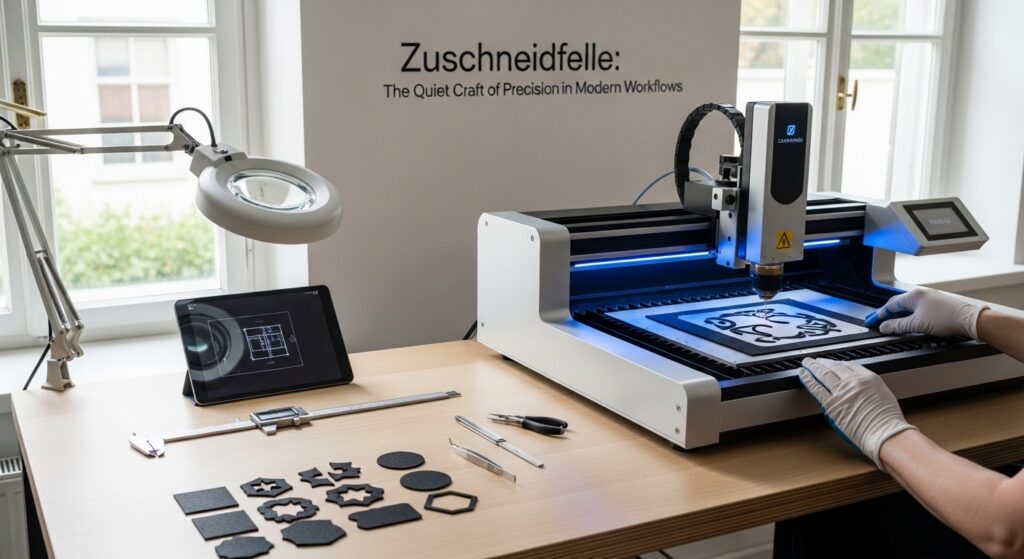
In a small workshop tucked behind a busy street, a craftsperson runs their hand across a surface that looks unremarkable to most people. It isn’t polished steel or advanced machinery. It’s a zuschneidfelle — a cutting mat designed to absorb pressure, protect tools, and quietly make precision possible. There’s no drama in the moment, no loud innovation headline, yet this simple surface determines whether work is clean or compromised, efficient or frustrating. In an era obsessed with speed and software, zuschneidfelle remind us that foundational tools still shape outcomes in powerful ways.
At its core, zuschneidfelle represent the overlooked layer of modern productivity. Whether used in manufacturing, creative studios, logistics, or prototyping environments, they act as silent partners to skilled hands and sharp tools. Understanding their role is less about materials alone and more about how professionals design systems that reduce friction, protect investments, and improve consistency over time.
Understanding Zuschneidfelle Beyond the Surface
Zuschneidfelle are not simply cutting mats; they are engineered working surfaces designed to balance durability, flexibility, and self-healing properties. Unlike disposable alternatives, they are built to withstand repeated cuts while maintaining a flat, reliable plane. This balance matters because cutting accuracy is not only about the blade but also about what lies beneath it.
In professional environments, even minor inconsistencies can compound into measurable inefficiencies. A surface that shifts, deforms, or dulls blades prematurely disrupts workflow rhythm. Zuschneidfelle address this problem by acting as a stabilizing element. They protect both the tool and the workpiece, enabling repeatable results without constant recalibration or replacement.
What makes them especially relevant today is their adaptability. As industries move toward leaner operations, tools that serve multiple purposes without degradation become strategic assets rather than accessories.
Why Zuschneidfelle Matter in Professional Settings
In workshops, studios, and production floors, time lost to tool maintenance or material damage directly affects output. Zuschneidfelle help reduce these losses in subtle but meaningful ways. By absorbing blade impact, they extend tool lifespan, which lowers replacement costs and reduces downtime. This alone makes them valuable, but their influence goes further.
Professionals often underestimate how much mental energy is spent compensating for unreliable surfaces. When the cutting base is consistent, attention can shift fully to design, measurement, and execution. Over time, this creates a smoother cognitive workflow, where precision becomes habitual rather than forced.
In entrepreneurial environments, where resources are limited and margins matter, such reliability supports scalability. Small improvements in daily operations compound into long-term advantages, and zuschneidfelle quietly enable that compounding effect.
Material Science and the Evolution of Zuschneidfelle
The effectiveness of zuschneidfelle lies in material engineering. Most are constructed from layered polymers that combine firmness with elasticity. This structure allows the surface to close slightly after cuts, a property often referred to as self-healing. While the term sounds almost poetic, it has practical implications: fewer grooves, more even resistance, and longer usable life.
Earlier cutting surfaces were either too hard, damaging blades, or too soft, distorting cuts. Modern zuschneidfelle exist in a carefully engineered middle ground. This evolution mirrors a broader trend in industrial design, where materials are optimized not for extremes but for balance.
As sustainable manufacturing becomes a priority, newer zuschneidfelle are also designed with longevity in mind. A surface that lasts years instead of months reduces waste and aligns with responsible production values without sacrificing performance.
Comparing Zuschneidfelle to Alternative Cutting Surfaces
To understand the value of zuschneidfelle, it helps to compare them with common alternatives used across industries. The table below highlights practical differences that influence daily operations.
| Cutting Surface Type | Durability Over Time | Blade Protection | Precision Consistency | Long-Term Cost Efficiency |
|---|---|---|---|---|
| Zuschneidfelle | High | Excellent | Very Stable | Strong |
| Wooden Boards | Medium | Low | Variable | Moderate |
| Glass or Metal | Very High | Very Low | High but Risky | Low |
| Disposable Mats | Low | Medium | Declines Quickly | Weak |
This comparison shows why zuschneidfelle are often chosen in professional contexts. They strike a balance that alternatives struggle to maintain, especially when consistency and safety are non-negotiable.
Zuschneidfelle in Creative and Technical Workflows
While zuschneidfelle are often associated with industrial cutting, their role in creative fields is equally significant. Designers, architects, and model makers rely on precise cuts that preserve material integrity. In these environments, the cutting surface becomes part of the creative process rather than a passive support.
The tactile feedback provided by zuschneidfelle influences how a blade moves, how pressure is applied, and how confident the user feels. This feedback loop shapes muscle memory, which in turn affects speed and accuracy. Over time, professionals develop a relationship with their tools, and zuschneidfelle form the foundation of that relationship.
In technical settings such as prototyping or small-batch manufacturing, this same reliability supports experimentation. When the base surface can be trusted, teams are more willing to iterate, test, and refine ideas without fear of material waste.
Economic Impact and Long-Term Value
From a cost perspective, zuschneidfelle often appear more expensive upfront than basic cutting surfaces. However, this initial perception shifts when evaluated through a long-term lens. Reduced blade replacement, fewer damaged materials, and improved efficiency all contribute to measurable savings.
For founders and operations managers, this aligns with a broader principle: investing in infrastructure that minimizes hidden costs. Zuschneidfelle exemplify how modest tools can deliver disproportionate value when integrated thoughtfully into workflows.
In scaling businesses, standardization is crucial. Using consistent cutting surfaces across teams ensures predictable results and simplifies training. Zuschneidfelle support this standardization by offering uniform performance regardless of user experience level.
Maintenance, Care, and Professional Longevity
One of the understated strengths of zuschneidfelle is their low maintenance requirement. Regular cleaning and mindful use are usually sufficient to preserve performance. Unlike surfaces that degrade visibly and demand frequent replacement, zuschneidfelle age gradually and predictably.
This predictability matters in professional planning. When equipment lifespan is known and stable, budgets become easier to manage, and unexpected disruptions are reduced. Over years of use, a well-maintained zuschneidfelle becomes a reliable constant in an otherwise changing workspace.
Their resilience also reinforces a culture of care. Tools that last encourage users to treat their environment with respect, reinforcing professional discipline and pride in craftsmanship.
The Future Relevance of Zuschneidfelle
As automation and digital fabrication continue to evolve, one might assume that physical cutting surfaces will lose relevance. In reality, the opposite may be true. Hybrid workflows that combine digital precision with manual adjustment still depend on reliable physical foundations.
Zuschneidfelle are likely to adapt alongside these changes, incorporating new materials or modular designs. Yet their core purpose will remain unchanged: to provide a stable, forgiving surface that supports human skill. In a future defined by rapid innovation, such stability becomes increasingly valuable.
Rather than being replaced, zuschneidfelle will continue to anchor workspaces, bridging the gap between advanced tools and human intuition.
Conclusion
Zuschneidfelle do not demand attention, and perhaps that is their greatest strength. They operate quietly beneath the work, shaping outcomes without interrupting flow. For professionals, entrepreneurs, and creators, this quiet reliability becomes a competitive advantage.
By investing in zuschneidfelle, teams invest in consistency, longevity, and confidence. These qualities rarely appear on balance sheets, yet they influence every result that follows. In a world chasing constant upgrades, zuschneidfelle remind us that mastery often begins with choosing the right foundation.