
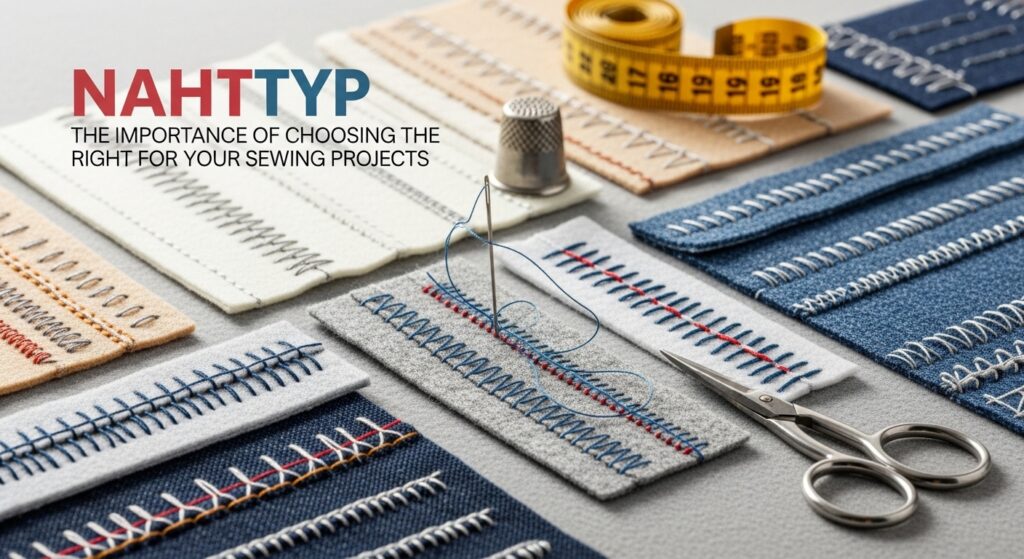
When it comes to sewing, the details matter. One of the most crucial elements that can make or break your project is the Nahttyp, or seam type. Whether you’re a seasoned stitcher or just starting out, understanding the significance of choosing the right Nahttyp can elevate your creations from ordinary to extraordinary. Each stitch tells a story about your fabric and design choices. So, let’s explore why this seemingly small decision holds so much weight in your sewing journey and how it impacts everything from durability to aesthetics. Get ready to unlock new levels of creativity with every seam you sew!
Factors to consider when choosing the right Nahttyp for your project
Choosing the right Nahttyp is crucial for a successful sewing project. First, consider the fabric you’re working with. Different materials behave differently under pressure and stress. Weight plays a significant role too. Lightweight fabrics often require delicate stitching, while heavier materials need more robust seams to withstand wear and tear. Next, think about the type of garment or item you are creating. Is it something that will experience frequent movement? Or is it meant to be decorative? This can influence your choice significantly.
Don’t forget about aesthetics. The stitch style can enhance or detract from your design’s overall look. Consider ease of use with your sewing machine. Some stitches may not work well with every model, so check compatibility before starting your project to avoid frustration later on.
Different types of Nahttyp and their uses
When diving into the world of Nahttyp, it’s essential to understand the various types available and their specific uses. Each type serves a unique purpose, influencing both functionality and aesthetics. Straight stitches are among the most common. They provide strong seams for everyday fabrics like cotton or denim. These stitches are versatile and reliable. Zigzag stitches offer flexibility. They’re perfect for stretchable materials such as knits or spandex since they allow fabric movement without breaking.
For decorative purposes, you might opt for decorative stitches. These add flair to your projects while also providing reinforcement at stress points. Overlock stitching is a game-changer for finishing raw edges. It prevents fraying on woven fabrics and gives garments a professional look. Understanding these different Nahttyp options can greatly enhance your sewing experience!
The impact of using the wrong Nahttyp on your sewing projects
Using the wrong Nahttyp can lead to a myriad of issues in your sewing projects. First, it may result in seams that unravel easily. This not only compromises the integrity of your work but also leads to frustration.
Additionally, mismatched stitches can create unsightly puckering or distortion in the fabric. Instead of achieving that polished look you desire, you might end up with a garment that appears poorly made.
Consider also the durability factor. A nahttyp unsuitable for your fabric type can cause wear and tear much faster than intended. Your beautiful creation could fall apart after just a few washes, leaving you disappointed.
Beyond aesthetics and durability, using an incorrect nahttyp affects comfort too. Imagine wearing a lovely dress only to feel irritation from rough seams against your skin—definitely not ideal! Choosing wisely is crucial for both functionality and visual appeal in any project.
Tips for successfully matching Nahttyp with fabric and project type
When matching Nahttyp with fabric and project type, start by considering the weight of your material. Heavier fabrics like denim require sturdier stitches, while lightweight options benefit from finer threads.
Next, think about the stretch. Fabrics such as knits need a flexible stitch to accommodate movement without breaking. A zigzag or serger stitch works wonders here.
Don’t overlook the finish you desire. If you’re aiming for a polished look on garments, try French seams or flat-felled seams for extra durability and aesthetics.
Always test your chosen Nahttyp on scrap pieces before diving into your main project. This will help ensure that everything aligns perfectly in terms of appearance and functionality.
Keep the end use in mind—will it be laundered frequently? Choose a Nahttyp that stands up to wear and tear over time to maintain quality.
Common mistakes to avoid when selecting a Nahttyp
One common mistake is ignoring fabric characteristics. Different materials behave uniquely under stitches. A lightweight silk requires a finer thread than heavy denim.
Another pitfall is relying solely on personal preference without considering the project’s demands. Just because you love a particular stitch doesn’t mean it suits every task.
Choosing the wrong needle can also sabotage your efforts. Each Nahttyp often pairs with specific needles for optimal results, so do your research before starting.
Forgetting to test your chosen Nahttyp on scrap fabric can lead to unpleasant surprises. Always take a moment to run some tests; they save time and frustration later.
Don’t underestimate the importance of proper tension settings on your sewing machine. Incorrect tension can distort stitches, making even the best Nahttyp look unprofessional in execution.
The importance of paying attention to details in sewing and the role of
Sewing is an art that thrives on precision. Each stitch, each seam contributes to the final masterpiece. Ignoring details can lead to outcomes that are far from your vision.
When you choose the right Nahttyp, it enhances not only durability but also aesthetics. Different fabrics demand different stitching techniques. A careful selection can elevate a simple project into something extraordinary.
Attention to detail extends beyond just stitches; it involves color matching, fabric texture, and finishing techniques as well. Each element plays a role in how the finished product will be perceived.
Moreover, imperfections often highlight flaws rather than creativity. Paying close attention ensures every piece aligns with your intent and achieves professional quality.
The joy of sewing lies in creating something uniquely yours—every detail counts towards achieving that dream garment or accessory. Embrace meticulousness for better results!
Conclusion
Choosing the right Nahttyp is an essential step in ensuring your sewing projects turn out beautifully and functionally. The significance of this decision cannot be underestimated, as it affects not only the aesthetics but also the durability of your work. By carefully considering factors like fabric type, project requirements, and thread tension, you can significantly enhance your sewing experience.
Understanding different types of Nahttyp—such as straight stitches for seams or zigzag stitches for stretch fabrics—is crucial. Each has its specific application that can make or break a project. Using the wrong stitch type can lead to frustration and subpar results, ultimately hindering your creative expression.
It’s important to match Nahttyp with the fabric you’re using and consider how it will perform throughout wear or wash cycles. Avoiding common pitfalls such as mismatched threads or neglecting to test on scrap pieces can save you time and effort down the line. Attention to detail plays a pivotal role in successful sewing projects. When every element aligns—from stitching style to fabric choice—the outcome can be immensely satisfying. By keeping all these points in mind, you’ll elevate both your skills and results in any sewing endeavor. Embrace experimentation while cherishing those small details; they truly make all the difference.